

History of Ede
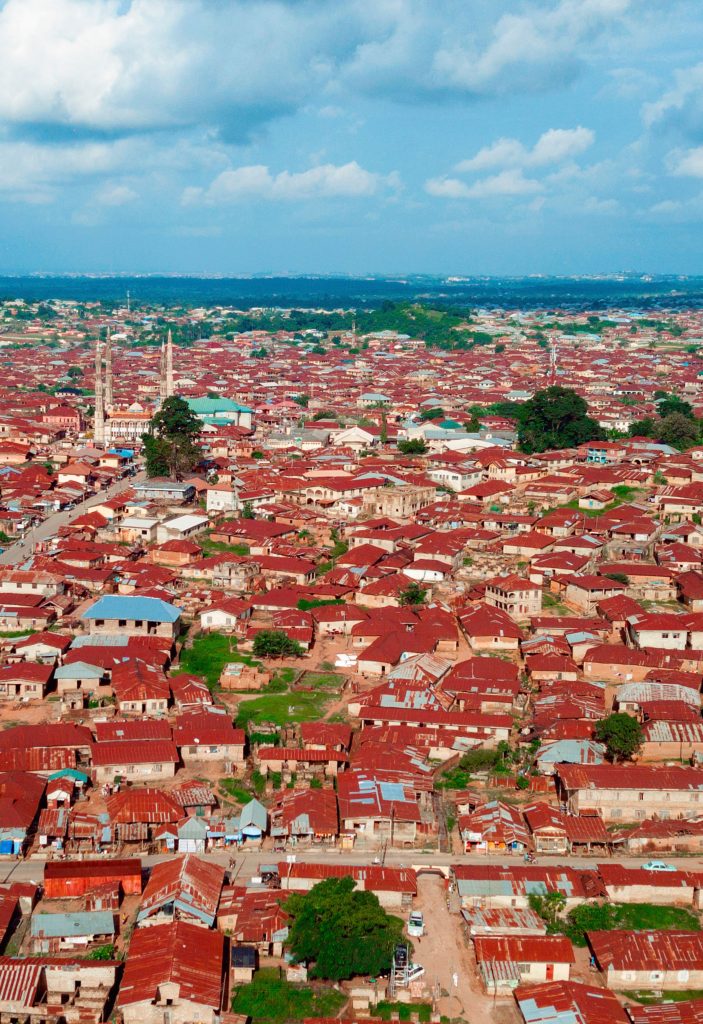
Ede is one of the most ancient Yoruba towns in Southwestern Nigeria.
Various accounts attributed the foundation of Ede to either Alaafin Sango or Alaafin Kori. It was an important and strategic outpost of the imperial Oyo with a definite mandate, as a warrior to protect major Oyo settlements – Awo, Ara, and Ojo, among others. Under the leadership of Agbale Olofa Ina, Ede successfully rebuffed the incessant Ijesha incursions into the Oyo territory. From the account of Samuel Johnson (the author of The History of the Yoruba, 1921) and Professor Isaac Adeagbo Akinjogbin, the military mandate of Ede went beyond territorial integrity, it also intersected with economic objectives. Ede was charged with the responsibilities of protecting Oyo – Apomu bound traders from the harassment by some Ijesha groups in Ibokun, Ipole, Oke-Esa and Ijebu Jesa. Recent archaeological findings have also established the significance of Ede-Ile to the overall suzerainty of the imperial Oyo until the 19th century crisis.
It was at Ede-Ile that the institution of Timi first emerged. From the account of Olunlade, a prominent Ede traditional historian, the pre-1800 Timi of Ede include Agbale Olofa Ina, Alapo Tiemi Tiemi, Ladokun, Lalemo, Lamodi, Alale, Oniyito, Salade, Atagba and Oyefi. There were also, Oke, Winjobi, Lasiyi and Oniyito II. Oniyito II was the last Timi to reign at Ede-Ile. The political troubles that precipitated the decline of Ede-Ile was characterized by the overall global and local socio-economic, religious and political changes of the 19th century. As the 19th century industrial revolution in Europe transformed human society, slavery and slave trade that had dominated the previous centuries and constituted a source of economic interaction between major powers in Africa and Europe became unfashionable. It unleashed a chain of changes that affected the entire Yoruba country. The breakdown of power in Oyo also affected Ede-Ile and many other Yoruba settlements in many ways in the southern Yoruba country. As princes in Ede-Ile struggled for political power, Oyo that had served as a peace broker in the previous centuries was also on the verge of collapsing. There was also the threat by the Fulani Jihadist from the northern Yorubaland. It was in response to the political instability of the 19th century that Agbonran Kubolaje led a contingent to establish the present Ede at the other side of River Osun.
Timi Kubolaje Agbonran I’s exploit in the 19th century was very crucial to the foundation of the present Ede. Timi Kubolaje Agbonran combined his political foresight, military prowess and diplomatic dexterity in the successful occupation of his new abode – Igbo Obotugbo. For instance, it is recorded that at Igbo Obotugbo, there were some Ife settlers. The head of this community was a hunter called Lagbonnu. Overtime, these settlers were successfully acculturated and would thereafter form members of Ede community. It is on record that marriage diplomacy took place between Lagbonnu and Timi Kubolaje, when the latter married his daughter, Jojolola to Agbonran to consolidate their peaceful coexistence. Between 1817-1818 and 1824 when the present Ede was founded and the demise of Timi Kubolaje Agbonran, he built a strong alliance with contemporary military leaders like Kakanfo Toyeje of Ogbomoso, with whom he prosecuted Pamo war of 1824. The relative security that Ede enjoyed under Kubolaje was due to his diplomatic dynamism as a nation-builder, whose contribution to peace-building in Yorubaland was noteworthy.
Another notable Timi of Ede in the 19th century was Timi Bamigbaye Ajeniju (c.1780-1843). He was one of the wealthiest traditional leaders of his time. Under his leadership, the cultural affinity that Ede shared with Ogun (goddess of iron) changed to Sango. It was recorded that, at his birth, his two fists were closed and when the fists were opened, it contained a cowry shell and a small thunder stone, the two paraphernalia that are traditionally associated with Sango. His birth was therefore interpreted to mean that he was destined to worship Sango. Under Timi Abibu Lagunju, Islam crystalized in Ede. It became very popular among the people as Muslim adherents flocked into Ede in the aftermath of Fulani onslaughts. Although, the introduction of Islam was associated with Ojo Arohanran, the younger brother of Timi Bamigbaye Ajeniju. It was recorded that Ojo invited a Muslim friend to pray against the Ibadan forces during the Yoruba civil wars. In the aftermath of Buremo Owolarogo intervention and the success recorded, he was settled at Ede. This marked the introduction of Islam in Ede and it was consolidated during the time of Timi Abibu Lagunju.
Like Islam, Christianity was also consolidated in Ede during the reign of Timi John Adetoyese Laoye I. He was the first Christian Oba to have mounted the stool of Timi and also, the first educated Timi in the history of the town. Timi John Adetoyese used his office to reposition Christianity in Ede and new Christian denominations sprang up. History records one Jacob Oyebode Akerele of Olosun Compound as the first Chistian in Ede. During his sojourn in Ogbomoso, Jacob became a convert and joined the Baptist Mission. He would later return to Ede and contributed to the growth of Christianity in Ede. In addition to Baptist mission, other notable missions in Ede are Anglican Church, The Roman Catholic Church, Christ Apostolic Church, African Church Mission, The Seventh Day Adventist, Celestial Church of Christ, and Cherubim and Seraphim Church. Contemporary Christian establishment in Ede are Redeem Christian Church of God and Deeper Life Christian Ministry. It is noteworthy to mention that Christian missions contributed immensely to the growth of western education in Ede.
List of Timis: Ede Ile Episode
Alapo Tiemi-Tiemi (Olofa Ina)
Timi Agbale Olofa Ina
Timi Laokun
Timi Lamodi
Timi Lalemo
Timi Alale
Timi Oniyito
Timi Atagba
Timi Oke Wingbori
Timi Oyefi
Timi Lasiyi
Timi Kubolaje
Timis in New Ede
Timi Kubolaje Agbonran I (1796-1824)
Timi Bamigbaye Ajeniju (1824-1841)
Timi Ojo Arohanran (1841-1848)
Timi Abibu Lagunju (1848-1892)
Timi Olunloye (1865-1872)
Timi Lanisebe (1882-1889)
Timi Monsuloye (1889-1899)
Timi Oyenekan (1899-1924)
Timi Ipinoye (1924-1933)
Timi Sanusi Akangbe (1934-1946)
Timi John Adetoyese Laoye (1946-1975)
Timi Tijani Oladokun Oyewusi, Agbonran II (1976-2007)
Timi Munirudeen Adesola Lawal, Laminisa I 2008 –
0
K
Total People lived
in our city
in our city
0
K
Square kilometres
region covers
region covers
0
+
Years of
History
History
0
st
Average Costs of
Living
Living

Official website of the Federal Council of Ede Descendants Union.
Ede is an ancient town and one of the fastest growing urban centers in 21st century Nigeria.